Why Investing in Corporate Wellness Pays Off
Independent research suggests employers get back around £4.70 in improved productivity for every £1 spent on mental health support.
By Niall Ronan, Founder & Director, Titan Wellness ·
Independent research suggests employers get back around £4.70 in improved productivity for every £1 spent on mental health support, and poor employee mental health costs UK employers an estimated £51 billion a year. Wellbeing is a business decision as much as a people one.
The cost of doing nothing
Deloitte UK's Mental health and employers research (May 2024)puts a clear number on the cost of inaction:
- Poor mental health among employees costs UK employers an estimated £51 billion a year, of which about £24 billion is presenteeism, meaning people at work but not performing at their best.
- Employers see about £4.70 back for every £1 invested in mental health support, in improved productivity. The ROI figure averages findings from a literature review of 26 sources published since 2011.
- The costs come from a YouGov survey of 3,156 UK working adults, run for Deloitte in October 2023.
These are UK figures, but Irish workplaces face the same pressures on absence, retention and performance.
Engagement is a global problem
Gallup's State of the Global Workplace researchfound that only 20% of employees worldwide were engaged in 2025, down from 21% the year before. Gallup estimates the resulting lost productivity at around 10 trillion US dollars, roughly 9% of global GDP. Wellbeing and engagement are closely linked, so these numbers matter to any employer thinking about retention.
Want to see how a structured programme could work for your business?Talk to Titan Wellness
What this looks like in practice
At Titan Wellness we see the effect on the ground. In 2026, a global life-sciences client ran a wellbeing programme with us. In a survey of 154 employees, the average programme rating was 4.2 out of 5, and 62% said their wellbeing improved. Average live attendance was more than 250, up 56% year on year, and the share of people attending five or more sessions rose from 29% in year one to 56% in year two.
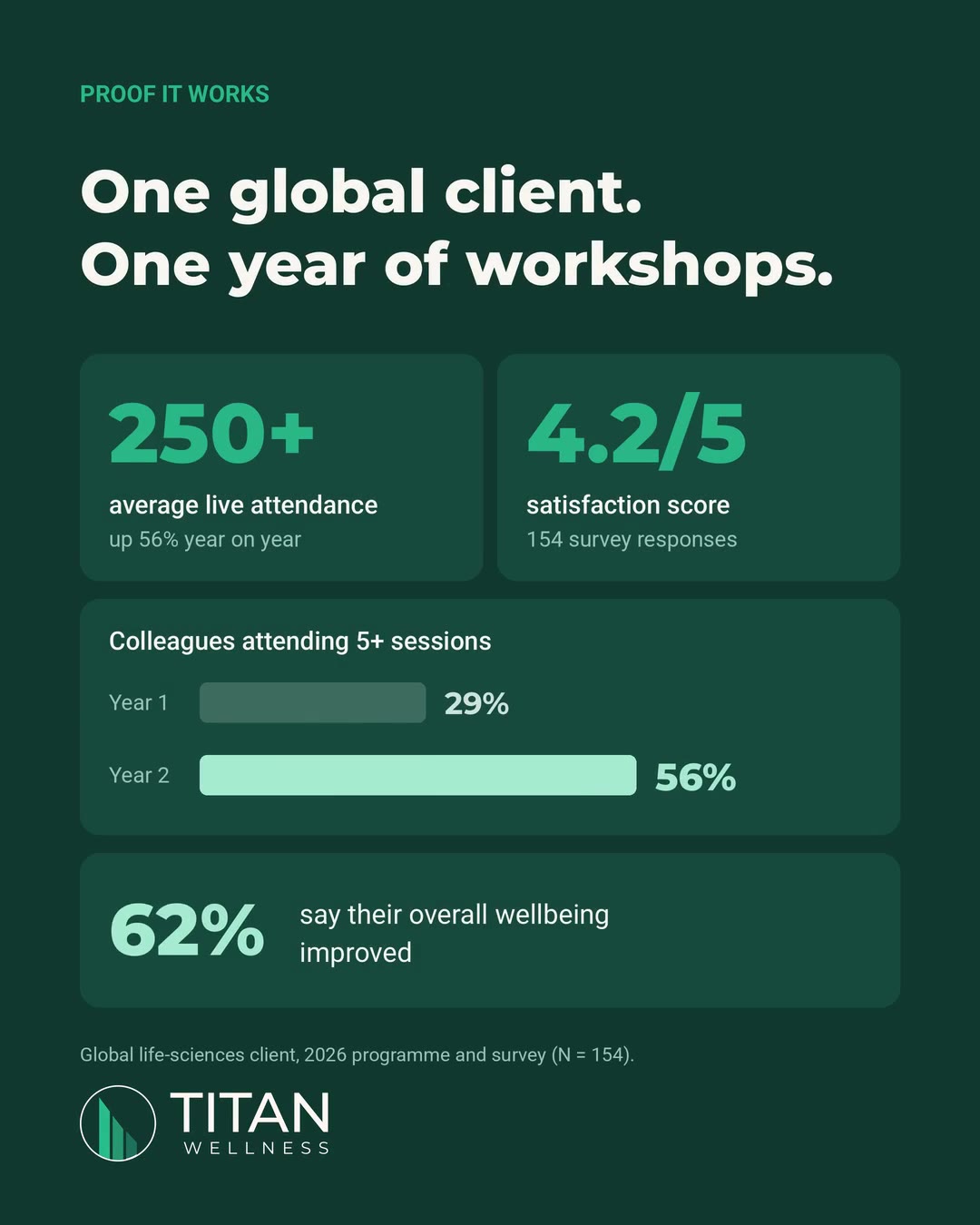
These are one client's results, from employees who chose to respond, so we treat them as encouraging rather than proof. They do suggest that when programmes are practical, varied and easy to attend, people keep coming back.
Where to start
- Measure first: use a short staff survey and absence and attendance data to find your biggest issues.
- Pick a few things and do them well: movement, mental health support and education beat a long menu of one-off events.
- Make it easy to attend: on-site gyms and classes in working hours remove the biggest barrier.
- Report back: track participation and satisfaction, and share the results with your leadership team.
Titan Wellness designs and runs these programmes for corporate clients, includingworkplace gym managementand wellbeing events and workshops.
Frequently asked questions
What is the return on investment for corporate wellness?
Deloitte's 2024 research estimates about 4.70 pounds in improved productivity for every 1 pound spent on employee mental health support, based on an average of 26 published studies. Results vary by programme and workplace.
How much does poor mental health cost employers?
Deloitte estimates 51 billion pounds a year for UK employers, including about 24 billion pounds from presenteeism.
Does a wellness programme really reduce absence and turnover?
Well-designed programmes can help, but outcomes depend on take-up and fit with your workforce. Start by measuring and track the same measures after launch.
What should a first programme include?
Most employers start with physical activity (such as a workplace gym or classes), mental health education and a clear route to support, then build from there based on feedback.
How do we get people to take part?
Offer sessions during working hours, vary the formats, involve managers and ask staff what they want. A programme people want to attend does more than a longer list of events.
Sources:Deloitte UK, Mental health and employers research (May 2024)andGallup, State of the Global Workplace.
Ready to build the business case for wellbeing?
Talk to Titan Wellness about a wellbeing programme for your organisation.