By Niall Ronan, Founder & Director, Titan Wellness ·
A few months ago, one of our client sites put up a board for Men's Health Week. Nothing elaborate: a few printed panels, some coloured index cards, a set of prompts — "My hero is…", "When I need to talk to someone, I ring…", "Someone who inspires me is…". By the end of the week, the board was full. Colleagues had written messages of support for one another, named the people they'd turn to, and stood together for a photo in front of it.
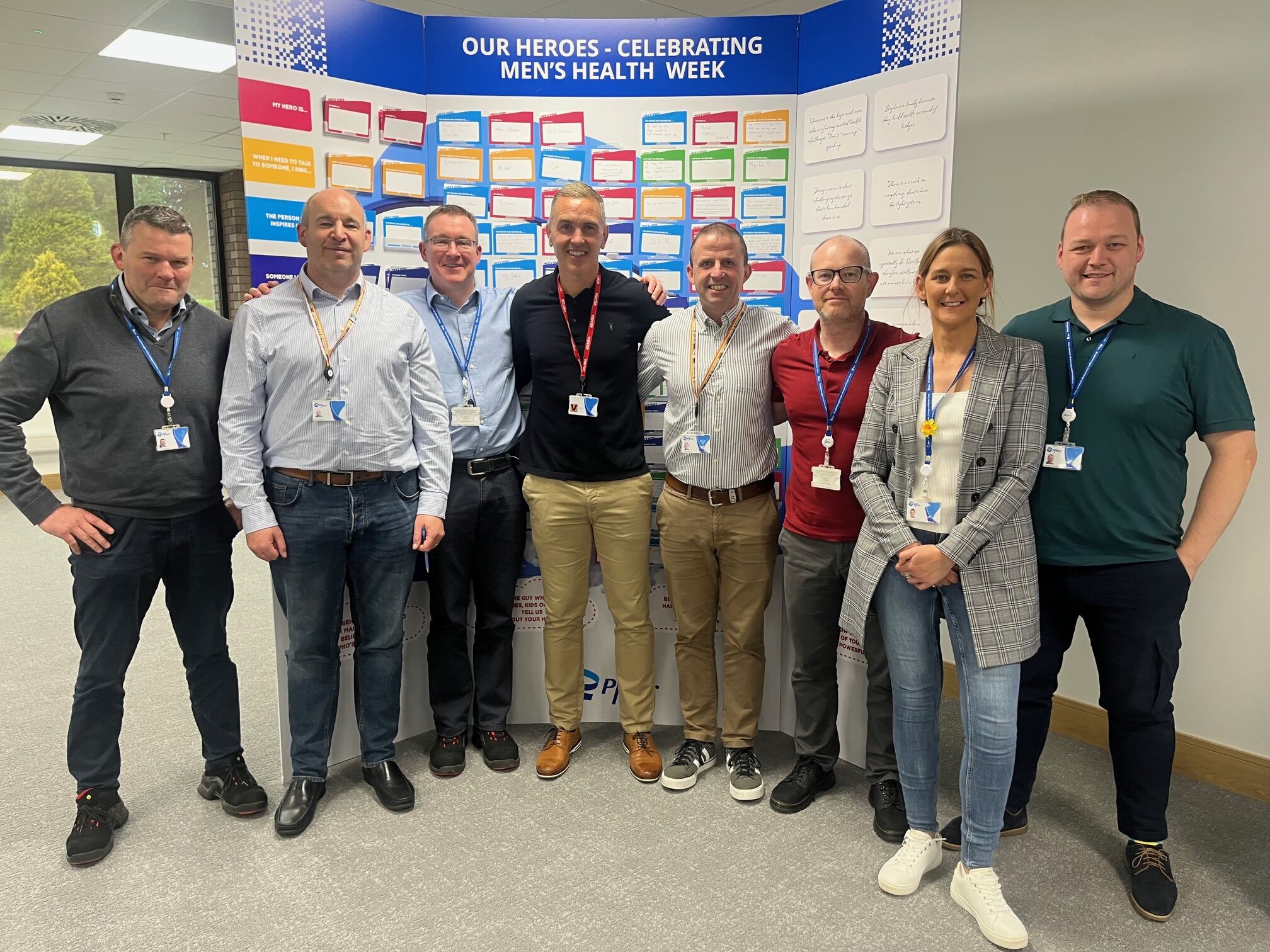
It's a genuinely lovely thing to be part of. It's also, if we're honest, exactly the shape of most workplace wellbeing effort in Ireland right now: well-intentioned, well-attended for a week, and reactive. A board goes up, a poster gets shared, a guest speaker comes in for an hour — and then the week ends, the board comes down, and everyone goes back to their desks.
Meanwhile, underneath all of that goodwill, something else is happening that nobody puts a board up for: people are quietly getting sick, quietly burning out, quietly deciding to leave, and quietly coming into work when they shouldn't. That cost doesn't take a week off. It runs fifty-two weeks a year, and it's a great deal more expensive than most employers realise.
The cost, in three Irish numbers
You don't need a spreadsheet to see the shape of the problem. Three figures from three different Irish sources tell most of the story on their own.
12.4%. That's the job churn rate the CSO recorded for Q3 2025 — the proportion of employees who changed employer during the quarter. It's down from 13.0% a year earlier, which sounds like good news, but look again: it means about one in eight people in the Irish workforce moved jobs in a single three-month period.
€10,125. According to the Adare HR Barometer 2025, that was the average cost of replacing an employee who left their role in 2024 — recruitment, onboarding, lost productivity, the works. The same report has employers anticipating an absence rate of 8.5% for 2025. Multiply either number across a workforce of any size and it stops being an abstraction fast.
40%+. SD Worx's Pulse Series research found that more than 40% of Irish employees feel pressured to keep working when they are sick, rising to 45.8% in organisations with 500 to 999 employees. That's not absenteeism. That's presenteeism: people showing up, underperforming, sometimes prolonging their own illness or spreading it to colleagues, because taking the day felt harder than pushing through.
Put those three together and a pattern emerges. Absenteeism and presenteeism aren't opposite problems — they're two sides of the same coin, and employers often pay for both at once: the cost of the person who didn't come in, and the cost of the person who did but shouldn't have. Either way, it's more expensive than prevention. The question is never really whether you can afford to invest in wellbeing. It's whether you can keep affording not to.
Looking at your wellbeing options? Explore our corporate wellbeing services
Three barriers, three fixes
Irish employees aren't turning down wellbeing because they don't want it. Vhi and Ipsos B&A's research points to three specific, practical barriers — and each one has a direct answer.
Barrier 1: stigma and visibility
Vhi's research with Ipsos B&A found that only 37% of employees believe their workplace supports them to engage in activities that maintain their health, and, more tellingly, one in three worry about being seen as less dedicated if they take time for wellness activities during working hours.
That's the stigma problem in one statistic: even where support exists on paper, people are quietly policing themselves out of using it.
The fix isn't another awareness campaign that lives and dies in a single week. It's open, visible education, built into the working year: wellbeing talks and workshops that put mental health, movement and nutrition on the agenda openly, led by Titan Wellness facilitators, in the workplace, during work hours, with management visibly taking part. When looking after your health at work is something that happens in the open, in front of everyone, it stops being something people feel they have to hide or apologise for.
Barrier 2: cost and confusion about where to start
Vhi's research also found that 54% of people cite cost as a barrier to engaging in preventative health measures. Left to source their own physio, nutrition advice or mental health support, employees weigh it up against everything else competing for their money and, often, decide it can wait.
The fix is to remove that calculation from the employee's hands altogether. Titan Wellness's wellbeing services — health assessments, physiotherapy, nutrition consultations and mental health supports — are delivered as an employee benefit, not an optional extra people have to justify paying for out of their own pocket. For the employer, it also replaces a scatter of ad hoc perks with one coordinated programme, which is easier to communicate, easier to measure and easier to keep consistent across a whole organisation.
Barrier 3: time and accessibility
The third barrier is the most practical of all. Vhi's research found that 45% of people cite a lack of time, and 66% say wellbeing activities are inaccessible or inconvenient. Even someone who wants to exercise regularly can be defeated by a commute in each direction to a gym they rarely have the energy to visit after a full day's work.
The fix is to put the gym where the working day already is. An onsite corporate gym means exercise happens inside the working day, in the same building, with no commute to a separate facility and no round trip eating into the hour that used to belong to family, dinner or rest. When the barrier to entry is a lift ride rather than a drive across town, "I don't have time" stops being the reason people don't go.
Fifty-one other weeks
That Men's Health Week board is still one of my favourite things we've seen at a client site. The client's own team put it up, as part of a wider wellbeing initiative we were proud to support. It said something true and important, and people meant every word they wrote on it. But a noticeboard is, at most, a nice gesture for one week of the year. It doesn't lower an absence rate. It doesn't stop somebody skipping a physio appointment because it feels like too much hassle after work. It doesn't bring someone who's unwell into work any less often, or keep a good employee from handing in their notice.
Talks that put health on the agenda openly, services that remove cost and confusion, and a gym that removes the commute — those are what make wellbeing part of the other fifty-one weeks. They're what turn a week of good intentions into something that actually moves the numbers we opened with: the churn, the absence, the sick days spent presenting at a desk instead of recovering at home.
Doing nothing has a cost. It's just spread quietly across the whole year, rather than turning up in one place where it's easy to see. If you'd like to talk through where to start — whether that's a first wellbeing talk, a coordinated set of health services, or scoping out an onsite gym — we'd be glad to help.
Frequently asked questions
What is job churn and what did the CSO record for Q3 2025?
Job churn is the proportion of employees who changed employer during a quarter. The CSO recorded a job churn rate of 12.4% for Q3 2025, down from 13.0% a year earlier. That still means about one in eight people in the Irish workforce moved jobs in a single three-month period.
How do absenteeism, turnover and presenteeism differ from one another?
Absenteeism is people not coming into work, while presenteeism is people showing up and underperforming, sometimes prolonging their own illness or spreading it to colleagues, because taking the day felt harder than pushing through. Turnover relates to job churn, the rate at which employees leave their employer altogether. Employers often pay for more than one of these at once.
Why do absenteeism, turnover and presenteeism each cost an employer money?
Each represents a different kind of lost productivity: the cost of the person who did not come in, and the cost of the person who did but should not have. Turnover is tied to job churn, with the CSO recording a 12.4% rate in Q3 2025. Either way, the real cost runs quietly across the whole year rather than appearing in one visible place.
What practical steps can employers take to bring these costs down?
Employers can run open, visible wellbeing education built into the working year rather than a single awareness week, with talks and workshops led by Titan Wellness facilitators during work hours. They can deliver health assessments, physiotherapy, nutrition consultations and mental health supports as a coordinated employee benefit. They can also put a gym inside the working day itself, removing the commute to a separate facility.