Waivers, Inductions and Safety Statements: What Every Corporate Gym Needs to Get Right
Why documented induction and waiver processes, and a proper written safety statement, are the foundation of a safe, defensible corporate gym.
By Paul McManus, Director & Fitness Facility Manager, Titan Wellness ·
Many employers assume that running a gym just means arranging public liability insurance and putting up a sign with a few rules on the wall. In practice, that's not what actually protects people or the business, and it's not what insurers or EHS teams expect to see when they ask how a facility is being managed. What matters is documented waivers, a proper induction process, and a written safety statement — the paperwork and process that sits behind the equipment, not the equipment itself.
Why a signed waiver matters
A waiver exists to capture informed consent. It gives someone the chance to disclose relevant health information before they train unsupervised, and it creates a documented record that the risks of using the space, and the correct way to use it, were actually communicated to them — not just assumed.
It's worth being clear-eyed about what a waiver is and isn't. Generally speaking, a waiver is evidence of a proper process having been followed, not a guaranteed legal shield in every circumstance. What it means for a specific incident depends on the facts of that situation, and that's ultimately a matter for a solicitor to assess — not something a general article like this can determine for you.
Want to see how this works in practice? See how health and safety is built into our facilities
Why induction matters
Every first-time user should be shown how to use the space and the equipment safely before they're given access to it. Done properly, this reduces genuine injury risk, and it creates a record that the employer met its duty of care to the people using the facility — rather than simply hoping everyone figures it out on their own.
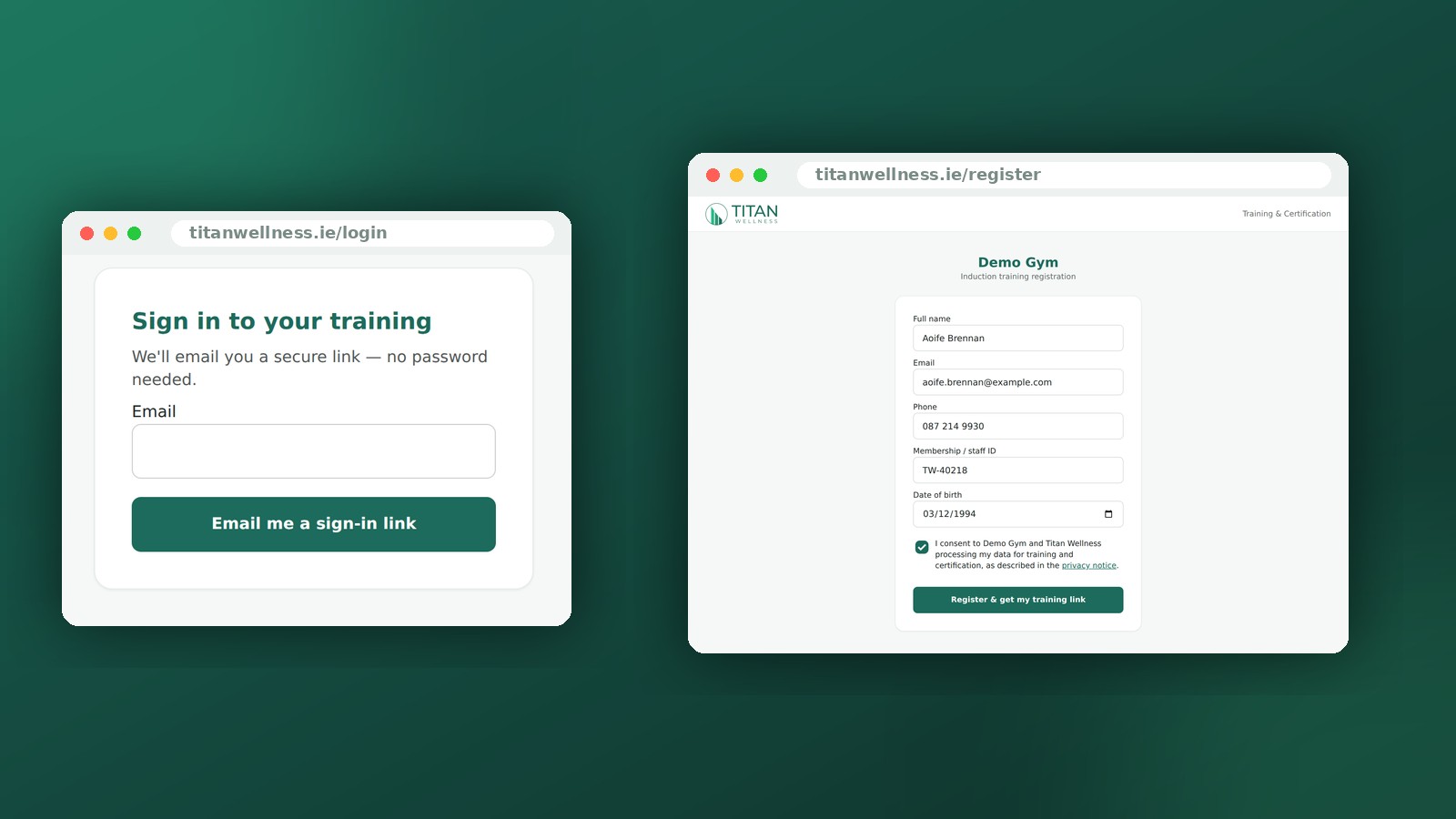
At Titan Wellness, induction is built into how every facility operates. We produce our own induction videos, filmed with professional videographers, as part of a guided digital induction process. Every user completes a digital induction and waiver, with health screening built in, before they're granted access — and access itself is tied to that sign-off being completed, not just encouraged as good practice.
The written safety statement
Under the Safety, Health and Welfare at Work Act 2005, every employer must prepare a written safety statement setting out the hazards it has identified, the risk assessment carried out, and the measures in place to control those risks — and that statement has to be reviewed regularly, not written once and filed away. This duty generally extends to any facility employees use in connection with their employment, which includes an on-site gym.
It's also worth noting that under Section 81 of the Act, the burden of proof generally sits with the employer. That's a key reason this needs to be documented in writing as a matter of course, rather than handled informally and relied on only if something goes wrong.
How Titan Wellness builds this in
This isn't something we assemble after the fact for a particular client — it's how every facility we manage operates, as a matter of course:
- ISO 45001 certified occupational health & safety management system.
- Documented safe systems of work — method statements, risk assessments and SOPs for every facility.
- Digital inductions and waivers for every user, with health screening built in.
- Guided induction videos produced in-house with professional videographers.
- Access control tied directly to induction sign-off, so access isn't granted before the process is complete.
- Scheduled equipment inspection and planned preventative maintenance, with a full audit trail.
- Qualified, insured, professionally onboarded instructors and staff.
- Structured incident reporting, investigation and close-out, with a full audit trail.
All of this is designed to feed directly into a client's own safety statement and EHS documentation — it gives your team real records to point to, rather than a verbal assurance. It doesn't replace your own legal obligation to hold a written safety statement; it's the operational evidence that supports it.
Disclaimer: This article is general information for planning purposes and does not constitute legal advice. Laws and individual circumstances vary, and this article can't account for the specifics of your organisation or a particular incident. If you're dealing with a specific policy question or a live issue, please speak to a solicitor and your insurer directly.
If you'd like to talk through how this documentation actually works in practice — from the digital induction flow through to how incident records are kept — our team is happy to walk you through it, or to send over our ISO & Health and Safety overview for your EHS or procurement team to review.
Frequently asked questions
Why does a corporate gym need a signed waiver rather than just public liability insurance?
A waiver exists to capture informed consent, giving someone the chance to disclose relevant health information before training unsupervised and creating a documented record that risks and correct use were actually communicated, not just assumed. A waiver is evidence of a proper process having been followed, not a guaranteed legal shield in every circumstance, and what it means for a specific incident is a matter for a solicitor to assess.
What does induction achieve for users of a corporate gym?
Every first-time user should be shown how to use the space and equipment safely before being given access, which reduces genuine injury risk and creates a record that the employer met its duty of care rather than hoping everyone figures it out on their own. Titan Wellness builds induction into every facility through digital induction and waiver completion, with health screening, tied to access itself.
What must a written safety statement under the Safety, Health and Welfare at Work Act 2005 contain?
Under the Safety, Health and Welfare at Work Act 2005, every employer must prepare a written safety statement setting out identified hazards, the risk assessment carried out, and the measures in place to control those risks, reviewed regularly rather than written once and filed away. This duty generally extends to any facility employees use in connection with their employment, including an on-site gym, and under Section 81 the burden of proof generally sits with the employer.
How do waivers, induction and the safety statement work together at a Titan Wellness facility?
Digital inductions and waivers with health screening, access control tied to induction sign-off, documented safe systems of work, scheduled equipment maintenance, and structured incident reporting are built into how every facility operates as a matter of course. This operational evidence is designed to feed into a client's own safety statement and EHS documentation, supporting rather than replacing the employer's own legal obligation to hold one.
Need documentation for your EHS or procurement team?
Request our ISO & Health and Safety overview or book a consultation with our team at sales@titanwellness.ie.